News: Rocket League - The game that keeps pulling me back
I have always had a blind spot for racing games. When I think about games, my mind leaps instinctively to strategy, battles, fantasy worlds, shooters, MOBAs - entire ecosystems of complexity and invention. Car games, in comparison, feel like a closed loop: go from point A to point B. The same goes for football games, with their limited objective of scoring more points than the opponent. Functional. Predictable. Not really for me.

And yet, Rocket League, a strange fusion of the two genres I habitually ignore, keeps drawing me in, year after year. After more than two hundred hours, it still surprises me. I still jolt when someone slams into my car from the blind side. I still tilt my head in real life to help guide an impossible shot. There is something irresistibly pure in the way Rocket League feels, moves, and responds. Its juice is fantastic.

✪ Introduction
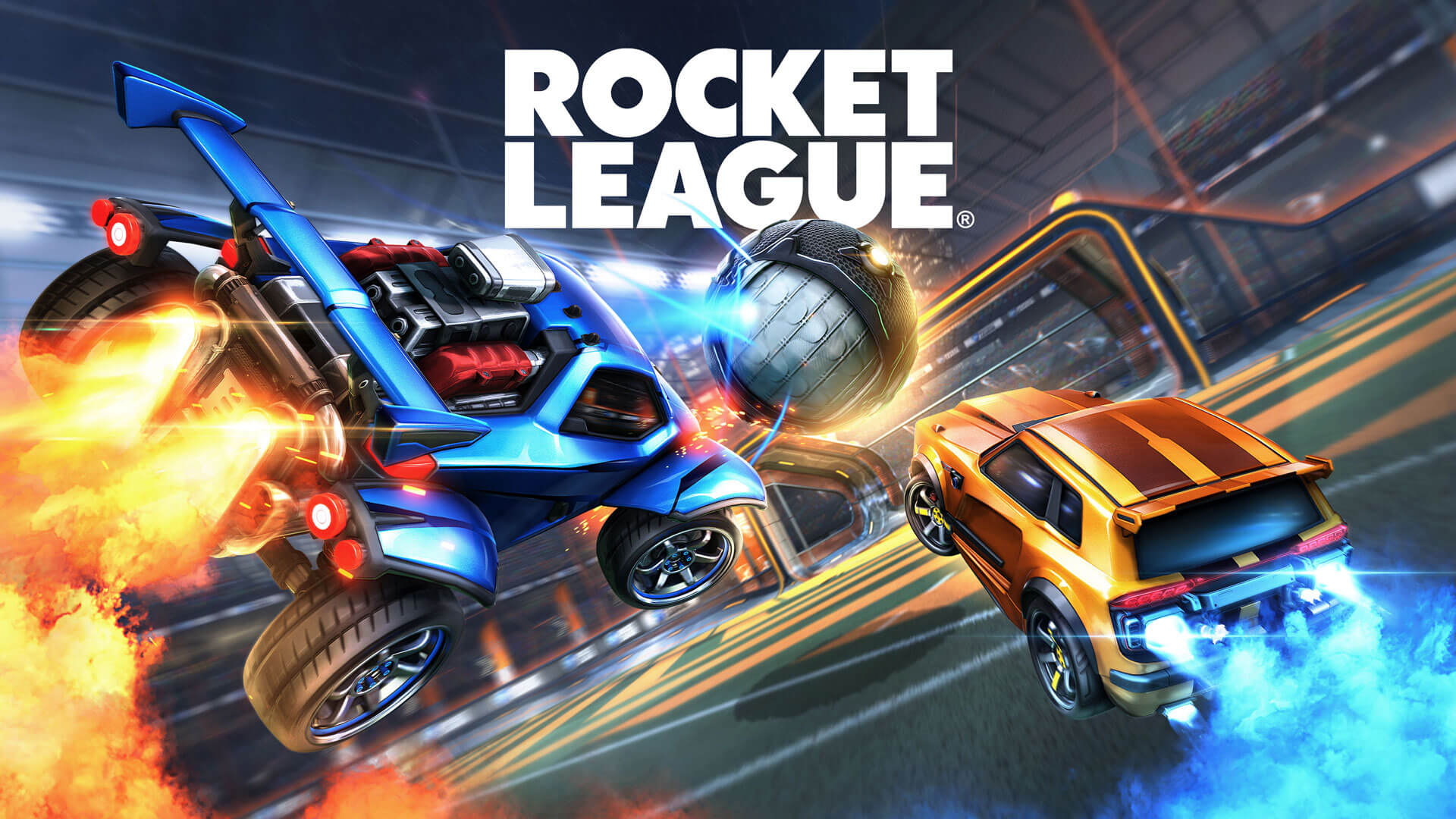
Rocket League presents itself with almost childish simplicity. Cars, a ball, goals. You
can jump, boost, and perform acrobatic flips that look like accidental pirouettes until
you learn how to command them. There is no dedicated button for a finesse pass or a
through-ball. No skill combinations to memorize. And somehow, none of that minimalism
limits the game. Instead, it frees it.

Five-minute matches reinforce this purity, the game is easy to put down. The short, self-contained loops encourage experimentation and keep frustration at the edges. The game becomes a rhythm, a habit... Something I can dip into for ten minutes or disappear into for an entire evening.

✪ The Feel of Play
Rocket League’s physicality still astonishes me. Cars collide with a surprising sense
of weight; the ball behaves like an overinflated toy desperate to escape control; the
boost system demands constant resource management without ever feeling like busywork.
What I appreciate most is the way everything is readable. The game’s clarity is its
greatest luxury. Even the replay when a goal is scored helps to understand the whole
course of action.

After two hundred hours, I am still learning how to rotate properly with teammates, how to shadow an opponent without overcommitting, how to fly with purpose instead of flapping through the air like a confused insect. The ceiling is impossibly high, yet the foundation is welcoming. Each match shows me a little more of the space between what I can do and what I could become.

✪ Culture, Style, and Identity
Part of Rocket League’s charm lies in how lightly it wears its influences. The customizable
cars evoke the best era of Need for Speed without drowning in excess, and the integrated
soundtrack continues that lineage. Every time I hear a track that channels the energy of
“Riders on the Storm”, I am transported back to long nights on fictional highways. Pure
nostalgia.

The online community, despite its flaws, is far more nuanced than what you find in many competitive games. I’ve encountered my share of toxic players, and anyone who plays online knows how that goes, but overall the tone feels more humane than in other titles. Maybe it’s the short length of each match, or the clarity of who’s accountable for what. Maybe it’s simply that the game is too ridiculous, too kinetic, too sincere to let frustration take root for long.

✪ The Phenomenon of “The Buddy”
There’s a small translation wrinkle to start with: in French, we’d simply say le pote,
a word whose English equivalent - “The Buddy” - can feel a bit too literal. But the
phenomenon itself is universal in online games. It’s that moment when a stranger quietly
turns into “The Buddy”. You queue up as a duo, the game assigns you a random third player,
and sometimes that person blends effortlessly into your style, anticipates your moves,
and lifts the whole match. When that happens, you send them another invite. No discussion,
no ceremony: just the silent understanding that they’ve become “The Buddy”.

I’ve been that player for others, and I’ve had my own share of buddies, temporary teammates whose name I quickly forget but whose presence briefly feels essential. In a game defined by physics, timing, and chaos, these shared moments of synchronicity feel almost intimate. They remind me that multiplayer games are built not only on competition, but on fleeting alignments between strangers who understand the game in compatible ways.

✪ A Simple Idea, Endlessly Renewed
In the end, Rocket League is exactly what it appears to be: cars playing football. It is
absurd, earnest, and unpolished in concept. But the execution reveals something far more
refined. The simplicity never becomes stale because the skill ceiling never stops expanding.
The game rewards curiosity, patience, and a willingness to fail publicly, over and over,
in the pursuit of small improvements.

I may continue to forget racing games when I list my favorite genres, and football games
may always feel interchangeable to me. But
Rocket League
stands apart. It is the exception that rewired my assumptions, the game that keeps calling
me back for one more match, and then one more after that. A reminder that oftentimes, the
most enduring experiences come from the simplest ideas.
Even more when those ideas are executed with confidence, clarity, and a surprising amount
of heart.